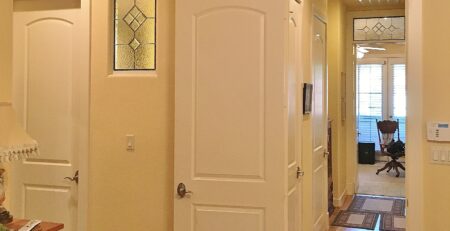
Classic Elegance: Diamond Stained Glass Atop Houston Vintage Estates
Drive through Courtlandt Place, The Heights, or the older blocks of River Oaks, and you will notice something the newer subdivisions rarely have: front doors and transoms crowned with diamond leaded glass. That crisp, repeating diamond grid has guarded the entryways of Houston vintage estates for more than a century, and it remains one of the most requested styles in our studio. Here is why diamond stained glass Houston homeowners fall in love with keeps outliving every design trend that comes along.
A Pattern with Deep Roots
The diamond lattice is one of the oldest window designs in the Western world, and it is the backbone of classic diamond stained glass Houston estates are known for. Medieval glaziers cut glass into small rhombus shapes because that was the most efficient way to work hand-blown panes, and the lead lines that held them together became a signature look in their own right. When English and Tudor Revival homes spread across American cities in the early twentieth century, the diamond window traveled with them.
Houston’s first great residential boom happened in exactly that era. Neighborhoods like Courtlandt Place were developed between roughly 1906 and the 1920s, and many of the homes there still wear their original beveled and leaded windows today. That longevity is not an accident; properly built leaded glass can serve a home well past a hundred years, and the long history of leaded glass shows how the technique has been refined across centuries of craftsmanship.
Why Diamonds Suit Texas Light
Anyone who has lived through a Gulf Coast summer knows how harsh and direct our sunlight can be. Diamond leaded glass is unusually well matched to it. Because the pattern is typically built from clear or lightly beveled panes rather than dense color, it filters and refracts sunlight instead of blocking it. The beveled edges act like tiny prisms, throwing small rainbows across entry halls in the morning.
The geometry also adds structural strength. Every diamond is supported on all four sides by the lead came, so large window openings can be filled with glass that stays rigid and stable even on wide Houston transoms and sidelights. In a climate where heat and storms are constant considerations, that grid of reinforcement is more than decorative.
Where Diamond Glass Belongs in a Vintage Estate
In the older homes we work on, the diamond pattern shows up in a handful of favorite locations, and the same placements still work beautifully in newer homes built in a traditional style:
- Entry doors and sidelights. A diamond grid on the front entry gives visitors a hint of the home’s character before they step inside, and it does so without exposing the foyer to the street.
- Transoms above interior and exterior doors. A transom filled with diamond leaded glass keeps light moving between rooms while preserving the period feel of the doorway.
- Cabinet doors and built-ins. Dining room hutches and butler’s pantries in Courtlandt Place era homes often feature small diamond-paned doors, a detail easily recreated in modern millwork.
- Stairway and landing windows. Tall, narrow openings suit the vertical rhythm of a diamond lattice perfectly.

If you want to understand how this style differs from painted or colored glass, our guide to what leaded glass actually is walks through the construction we use in the studio.
Privacy without Losing Daylight
Vintage estates often sit close to the sidewalk. Broad front windows that would feel exposed in a modern build were traditionally solved with diamond leaded glass, and the same logic applies today. The textured and beveled panes distort the view from outside, so a family can keep drapes open and still enjoy daylight and a connection to the yard. For many of our clients this is the deciding benefit: diamond glass delivers privacy the old-fashioned way, with design rather than darkness.
Bathrooms and street-facing studies benefit the same way. A diamond-patterned window in a powder room or home office turns an awkward exposure into a focal point, and the leaded grid reads as intentional architecture rather than an afterthought.
Matching New Work to Old Craft
When a Houston estate’s original diamond windows survive, our first preference is to preserve them. Where panels have sagged, cracked, or lost bevels over the decades, our team restores them using techniques aligned with accepted conservation standards, keeping the original glass wherever it can be saved. When a panel is beyond repair or a new addition needs matching work, we build new diamond leaded glass that mirrors the lead widths, bevel profiles, and spacing of the period so the old and new read as one.
That attention to matching matters especially at the entry. Because the front door is the most photographed and most remembered feature of a vintage home, our approach to stained glass entryway windows and doors focuses on period-correct proportions that complement brick, clapboard, and limestone facades alike.
A Lasting Investment in Character
Trends in interior design change every few years, but a diamond window has looked correct for six centuries. For owners of Houston vintage estates, that permanence is part of the value: the glass protects privacy, shapes the light, and signals that the home is cared for at a level most properties never reach. It is also one of the few upgrades that becomes more charming, not more dated, with time.
Contact Houston Stained Glass
If your vintage estate still wears its original diamond leaded glass, or you would like new panels built in that classic spirit, our studio is glad to help. We design, restore, and install diamond stained glass Houston homeowners have trusted for decades, and we start every project with a free consultation at your home. Reach out to Houston Stained Glass today and let us look at your entry, transoms, or heirloom windows together.